
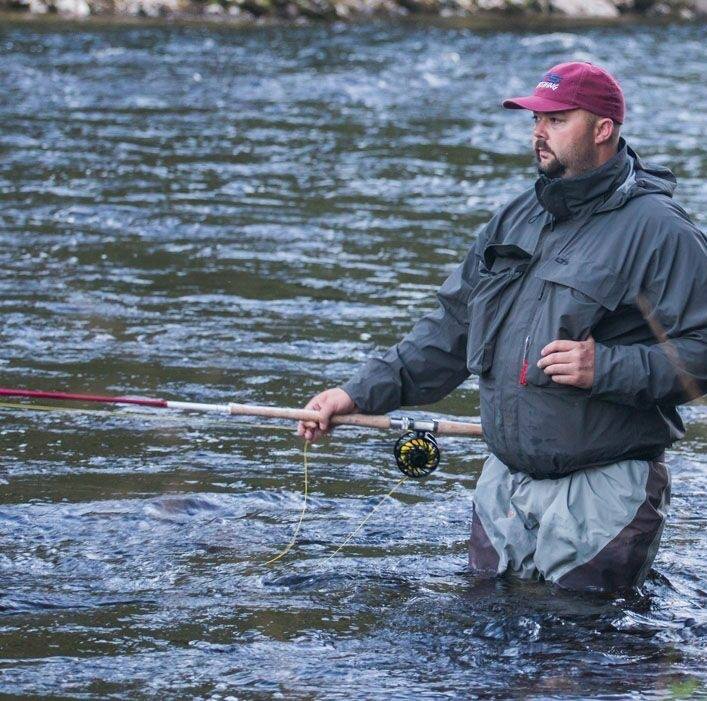
Many anglers have wondered what to choose from the huge range of equipment, and why.
In this article, I want to highlight some factors that can improve your chances of connecting with a fish.
I have fished the Orkla every summer for as long as I can remember, and got my first fly rod at the age of seven. In the early years of my salmon fishing, very few June salmon were caught on a fly.
Many people would say salmon fishing is all about luck, but I would argue otherwise. It is no coincidence that the same names top the catch statistics in rivers year after year. Luck certainly plays a part, but with the right equipment and experience, I believe you will be lucky more often.
Improving your luck largely comes down to presentation, depth, speed and fly choice. These vary with the time of season and where you fish.
In this first article, I will describe how I approach fishing early in the season. How often have you seen travelling fish show no interest in your fly, while other anglers catch fish on different tackle above and below you? I remember fishing the opening days on the Surna. Quite a few fish were caught, but all on spoons or worms, while I had no contact with a single fish on the fly for several days. Eventually, after a rather lively Saturday evening, I was so frustrated that I brought out the spinning rod. I lost the salmon, much to the postman's dismay, but I was well and truly merry and still smiling.
I believe the reason I caught no fish on the fly was simply lack of knowledge, and the wrong choice of fly and line. If fish can be caught on worms and spoons, they can also be caught on a fly. A small fly presented right at the surface may not be the most effective approach to travelling fish early in the season. Put a fairly large fly directly in their path, however, and your chances improve greatly. You give the fish a choice: move aside or take the intruder. In this early fishing, I often cast almost square across the river and let the line sink while moving three or four steps downstream after the cast. In summer conditions and warmer water, I instead tend to move while retrieving the line for the next cast.
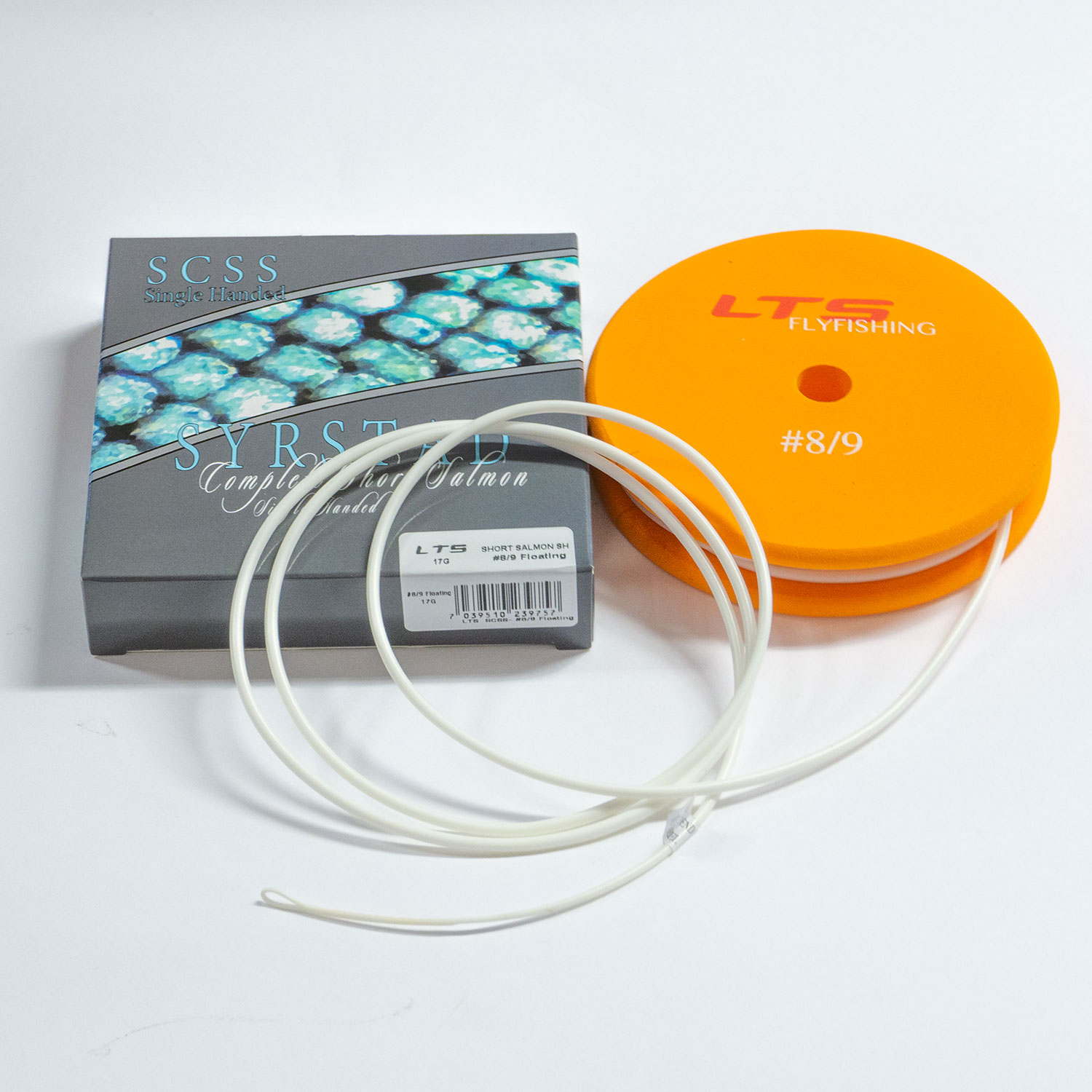
When the river is high, space behind you may be limited. A shorter sinking line, such as SCSS or extreme short speedline can be a sensible choice. I usually have three or four rods set up with different sinking densities. I do this because I want to fish deep throughout the pool. A fast-sinking line can fish higher in strong current, or when you reach a part of the pool where the current has slowed. To fish really deep without too much effort, you also need to wade deeper, unless you are fishing from an embankment or similar position. It can therefore be useful to make a first pass close to the bank, fishing the current edges and shallower water with a lighter line, then wade farther out on the next pass with a faster-sinking line. Depending on depth and current speed, I often start at the top with S2/4/6 through to S1/S2/S3. The advantage of lines such as SCS and SCSS is that you can change the tip if you touch bottom too often. Regular contact with the bottom does mean you are fishing correctly: early in the season, reaching large travelling fish involves risking a few lost flies and straightened hooks. If you get stuck on almost every cast, fit a slower-sinking tip. I always carry tips with leaders already attached in my inside pocket, so I can change tips quickly while standing in the river. I carry all the SCSS sinking densities in a wallet, along with Skagit T tips that sink very fast. If the line still fishes too deep, I change to a line with a slower-sinking belly.
As you move farther down the pool, where the current slows and you begin to touch bottom, you need a line that does not fish as deep. An SCSS in HI2, 123 or even a floating/sinking line can provide enough speed to avoid getting stuck.
For early-season fishing, I feel fly choice may matter less than when fishing resident fish later in the season. In a high river, though, use flies with a little more volume and flash. A seductively swimming wing, like those on our favourite flies usually works well. Colour preferences vary between rivers, so asking local anglers is always sensible.
Rod choice? Of course, many rods can be used, but for my early fishing in a high, powerful river I use 14, 15 and 16-foot rods. They let me cast long distances, lift heavy sinking lines and provide real backbone when a large fish takes the fly.
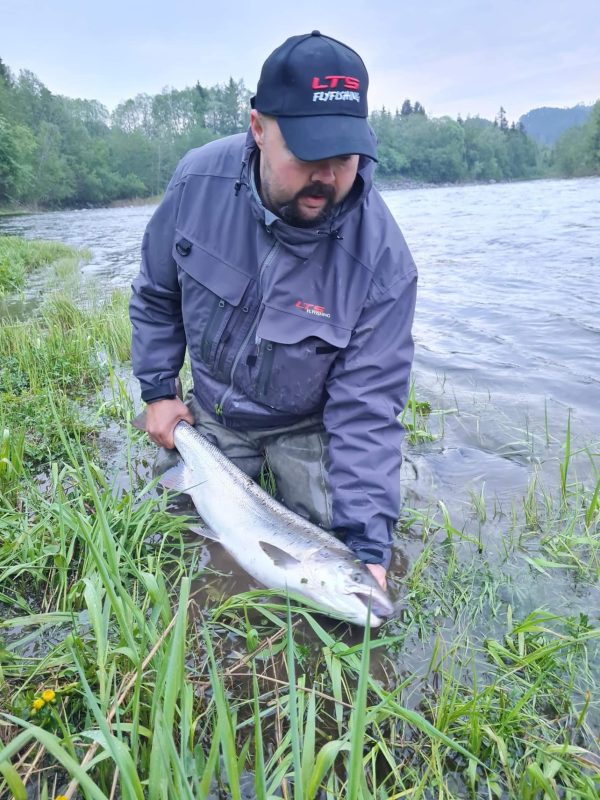
The rod rarely determines whether you land a fish, but I doubt I would have caught my opening fish in 2023 without the 16-foot Graphene rod. It gave me those extra metres of drift over the fish that showed itself.
To anyone who still believes you only need one line because a willing fish will take regardless, I would say: yes, that does happen eventually, but your lucky moments will be farther apart if you never vary your fishing.
Tight lines, Jon Erik
(Photo from opening-day fishing with heavy tackle on a high river)

-
-
Sale!
-
-
